

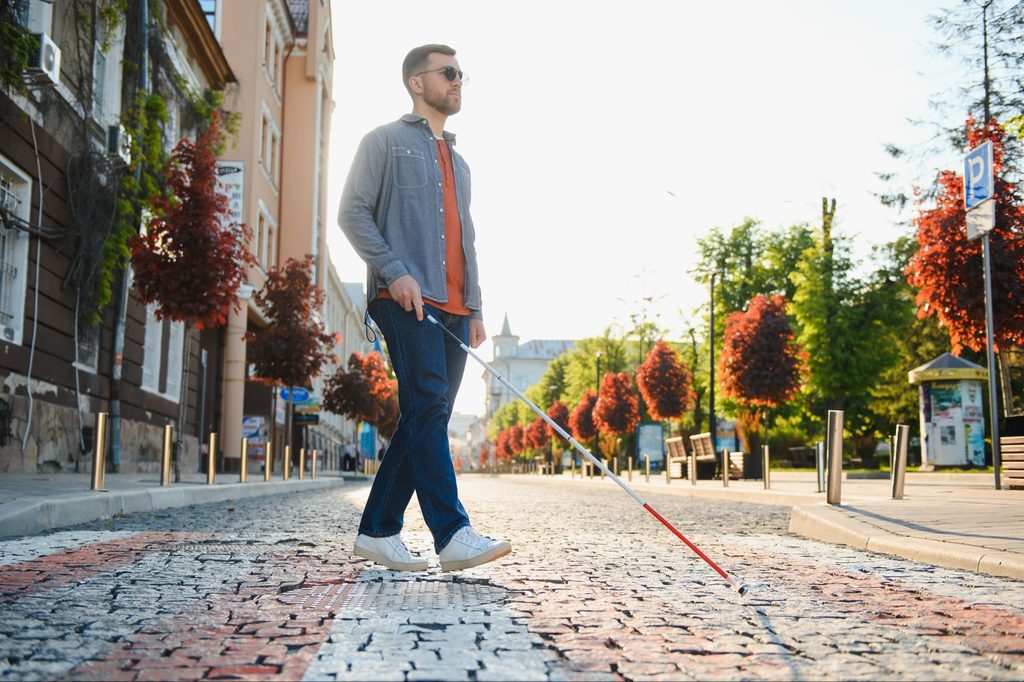
October is World Blindness Awareness Month, an opportunity to increase understanding of blindness and low vision, recognize the impact vision loss can have on everyday life, and highlight the resources available to help people live safely and independently.
Blindness does not always mean a complete absence of sight. Vision loss exists on a spectrum, and people who are considered blind or have low vision may have very different visual abilities and experiences.
What Does It Mean to Be Blind?
The term blindness can describe severe vision loss that cannot be adequately corrected with standard glasses or contact lenses. However, many people who are considered blind still have some usable vision, such as the ability to detect light, movement, shapes, or objects.
You may also hear the term legally blind. In the United States, legal blindness is a specific definition used to help determine eligibility for certain government programs and services. Generally, a person is considered legally blind if their vision in their better-seeing eye, with the best possible correction, is 20/200 or worse, or if their visual field is significantly restricted, typically to 20 degrees or less.
Being legally blind does not necessarily mean someone cannot see at all.
What Is Low Vision?
Low vision refers to significant visual impairment that cannot be fully corrected with glasses, contact lenses, medication, or surgery and makes everyday activities more difficult.
Someone with low vision may experience:
- Blurred or hazy vision
- Loss of central vision
- Reduced peripheral or side vision
- Blind spots
- Difficulty seeing in low light
- Problems recognizing faces or reading
- Reduced contrast sensitivity
The way vision loss affects daily life varies considerably from person to person. One person may have difficulty reading while still navigating familiar environments independently, while another may have good central vision but significantly limited peripheral vision.
What Causes Blindness and Vision Loss?
The causes of blindness and low vision vary by age, health history, access to care, and where a person lives. Globally, cataracts and uncorrected refractive errors are major contributors to vision impairment, while conditions such as age-related macular degeneration, glaucoma, and diabetic retinopathy are also important causes of vision loss.
Cataracts
A cataract occurs when the eye’s natural lens becomes cloudy. Cataracts can cause blurred or hazy vision, glare, faded colors, and difficulty seeing at night. Cataracts are a major cause of vision impairment worldwide, although vision can often be restored through cataract surgery.
Age-Related Macular Degeneration
Age-related macular degeneration (AMD) affects the macula, the central portion of the retina responsible for sharp, detailed vision. Advanced AMD can cause significant loss of central vision, making activities such as reading, driving, and recognizing faces difficult.
Peripheral vision is often preserved, which means AMD does not typically result in complete blindness.
Glaucoma
Glaucoma is a group of diseases that damage the optic nerve. Many forms progress gradually and may initially affect peripheral vision without causing noticeable symptoms.
Vision already lost to glaucoma generally cannot be restored, but treatment can often help slow or prevent additional damage.
Diabetic Retinopathy
Over time, diabetes can damage the small blood vessels, called microvascular disease, in the retina. Diabetic retinopathy may cause swelling, bleeding, abnormal blood vessel growth, retinal damage and detachment, and potentially severe vision loss.
Retinal and Optic Nerve Conditions
Retinal detachments, inherited retinal diseases, vascular conditions, optic nerve disorders, injuries, infections, and other medical conditions can also result in partial or severe vision loss.
Blindness Does Not Mean a Loss of Independence
Vision loss can change the way someone approaches everyday activities, but blindness or low vision does not mean a person cannot continue to live an active, fulfilling, and independent life.
Rehabilitation services and adaptive technologies can help people learn new ways to complete daily tasks, navigate their surroundings, communicate, work, and enjoy hobbies.
Depending on an individual’s needs, helpful tools may include:
- Magnifiers and specialized reading devices
- Large-print or high-contrast materials
- Screen magnification and screen-reading software
- Smartphone accessibility features and voice assistants
- Audiobooks and accessible digital materials
- Improved lighting and contrast around the home
- Orientation and mobility training
- Occupational therapy and vision rehabilitation
- Braille instruction
- Guide dogs or white-cane training
A low vision specialist can also help evaluate a person’s remaining vision and recommend devices, strategies, or rehabilitation services based on the activities that are most important to them.
Resources for People Living With Vision Loss
People experiencing significant vision loss and their families do not have to navigate these changes alone. A variety of national and local organizations provide education, rehabilitation, accessible materials, technology assistance, and other support.
Resources include the American Foundation for the Blind (AFB), National Federation of the Blind (NFB), VisionAware, and the National Library Service for the Blind and Print Disabled (NLS). State and local agencies may also offer vocational rehabilitation, mobility training, independent-living services, transportation assistance, and other programs.
Your eye care provider can be an important starting point for identifying appropriate low vision and rehabilitation resources in your community.
Understanding Vision Loss Builds Awareness
Increasing awareness, improving accessibility, and connecting people with appropriate resources can help ensure that vision loss does not become a barrier to participation, independence, and quality of life.
At Northwest Eye Surgeons, our physicians provide specialized medical and surgical care for a variety of conditions that can affect vision. We are proud to work alongside community eye care providers to help patients understand their eye health, manage complex eye conditions, and access additional resources when vision loss affects everyday life.

