

Struggling with Dry Eye Symptoms? There’s Finally a Better Answer.
If you’ve been managing dry eye with artificial tears but are still struggling with uncomfortable dry eye symptoms, you’re not alone. Dry eye disease affects millions of Americans, and for many patients, over-the-counter drops and warm compresses simply aren’t enough. Northwest Eye Surgeons is proud to offer OptiLight by Lumenis. This clinically proven, FDA-approved treatment goes beyond symptom management to address the underlying cause of most dry eye disease.
What Is OptiLight?
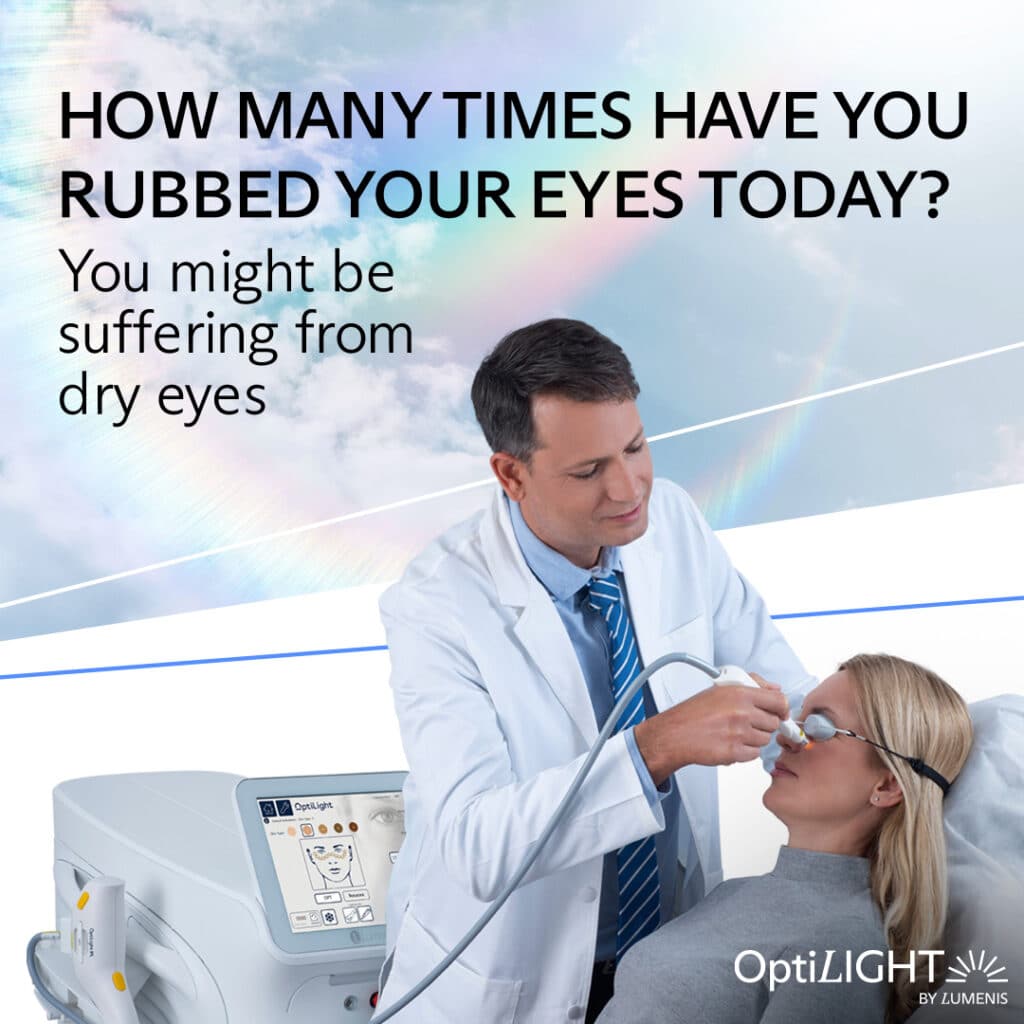
OptiLight is an Intense Pulsed Light (IPL) therapy specifically designed to treat dry eye disease caused by Meibomian Gland Dysfunction (MGD). It holds the distinction of being the first and only FDA-approved IPL treatment for dry eye management. Developed by Lumenis using their patented Optimal Pulse Technology (OPT™), OptiLight delivers precise, gentle pulses of broad-spectrum light to the skin beneath and around the eyes, targeting the root sources of inflammation that drive most dry eye cases.
Understanding the Root Cause: Meibomian Gland Dysfunction (MGD)
Your tears are made up of three layers: a watery layer, a mucin layer, and a thin but critical oil layer produced by the meibomian glands in your eyelids. This oily layer prevents your tears from evaporating too quickly. When the meibomian glands become clogged or inflamed, a condition called MGD, the oil layer breaks down, resulting in dry eye symptoms, such as red, itchy, irritated, or watery eyes. MGD is the leading cause of dry eye disease, accounting for approximately 86% of cases. Inflammation plays a central role: abnormal blood vessels near the eyelid margin leak pro-inflammatory molecules into the tear film, disrupting gland function and creating a vicious cycle that worsens over time. OptiLight is designed to interrupt that cycle.
How Does OptiLight Work?
OptiLight uses controlled pulses of light in the 590–1200 nm wavelength range, carefully applied to the skin below the eyes. The light energy works through several mechanisms simultaneously:
- Reduces inflammation by targeting and closing abnormal blood vessels (telangiectasia) that release inflammatory agents into the eyelid area
- Stimulates meibomian gland function, helping the glands produce and release healthy, lubricating oils
- Decreases the population of Demodex mites, which can colonize eyelid follicles and worsen inflammation
- Improves tear break-up time, so tears stay stable on the eye surface longer
What to Expect During Your OptiLight Treatment
Before your treatment: You’ll come in for a comprehensive dry eye evaluation to confirm OptiLight is right for you. We’ll review your symptoms, assess meibomian gland health, and document your Fitzpatrick skin type, which helps us customize your treatment settings.
During your session: The procedure is quick, comfortable, and entirely non-invasive. Your provider will apply a thin layer of cooling gel beneath your eyes and place protective eye shields over your eyes. You’ll feel a gentle warm or tapping sensation as light pulses are delivered to the treatment area. Each session takes only 10–15 minutes.
After your treatment: There is no downtime. You can return to your normal daily activities immediately, and in most cases you can apply makeup right away. Some patients notice slight temporary redness in the treated area, which typically resolves within a few hours. We recommend avoiding direct sun exposure for a few days following treatment and applying sunscreen to the treated skin.
How Many Treatments Will I Need?
The standard OptiLight protocol consists of 4 sessions, spaced approximately 2–4 weeks apart. Many patients begin to notice improvement in their dry eye symptoms after the second or third treatment, with optimal results achieved after completing the full series. To maintain long-term results, a maintenance session every 6–12 months is typically recommended.
Clinical Evidence: What the Research Shows
OptiLight is backed by more than 20 clinical studies demonstrating its safety and effectiveness. Research published in peer-reviewed journals has documented significant improvements in tear break-up time, reduced ocular surface inflammation, and improved meibomian gland function following a series of four OptiLight treatments. A comprehensive review in the National Institutes of Health (NIH) database describes IPL as an effective and safe treatment modality for moderate-to-severe dry eye disease due to MGD, with measurable improvements in objective markers including tear lipid layer thickness and Schirmer test scores.
Is OptiLight Right for You?
OptiLight is FDA-cleared for patients 22 years of age and older with moderate-to-severe signs and symptoms of dry eye disease due to MGD and with Fitzpatrick skin types I–IV. It is generally most appropriate for patients who:
- Have been diagnosed with MGD or evaporative dry eye
- Have tried artificial tears, warm compresses, or other treatments without adequate relief
- Experience chronic symptoms such as burning, stinging, redness, excessive tearing, or a gritty sensation
- Want a non-invasive, in-office solution with no downtime
OptiLight may not be appropriate if you have had ocular or eyelid surgery within the past 6 months, have certain skin conditions in the treatment area, use photosensitive medications, or have a history of migraines or epilepsy. Your provider will complete a thorough evaluation to confirm eligibility.
Schedule Your Dry Eye Consultation
You don’t have to keep reaching for the eye drops. OptiLight by Lumenis offers a clinically validated path to lasting dry eye relief and the team at Northwest Eye Surgeons is here to guide you every step of the way.
Contact us today to schedule your dry eye evaluation and find out if OptiLight is right for you.
References
- U.S. FDA. De Novo Classification Request for Lumenis Stellar M22 (DEN200028).
- Ribeiro BB, Marta A, Ramalhão JP, Marques JH, Barbosa I. Pulsed Light Therapy in the Management of Dry Eye Disease: Current Perspectives. Clinical Ophthalmology. 2022.
- Yan S, Wu Y. Efficacy and safety of intense pulsed light therapy for dry eye caused by meibomian gland dysfunction: a randomised trial. Ann Palliat Med. 2021.
- Leng X, et al. Intense pulsed light for meibomian gland dysfunction: a systematic review and meta-analysis. Graefes Arch Clin Exp Ophthalmol. 2021.

