

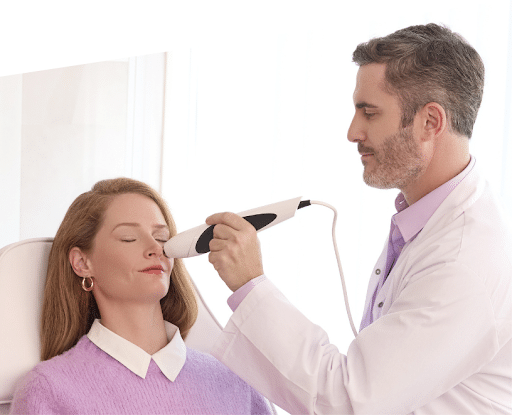
Could your eyelids be contributing to your dry eye symptoms?
When people think about dry eye, they often think only about tears. But in some cases, the way the eyelids blink and rest against the eye also plays a role. If the lower eyelid becomes loose or blinking is incomplete, tears may not spread evenly across the eye, and moisture may evaporate more quickly.
At Whatcom Eye Surgeons, we are proud to offer OptiLIFT, an in-office treatment designed to improve lower eyelid laxity and blinking without surgery. It uses two forms of energy: gentle radiofrequency heat and Dynamic Muscle Stimulation (DMSt), which activates the muscles around the eye.
What is OptiLIFT?
OptiLIFT is a nonsurgical treatment for lower eyelid looseness, also called lower lid laxity. The treatment is designed to:
- stimulate the muscles around the eye
- support eyelid tone
- improve blinking
- provide a mild lifting and tightening effect
Radiofrequency is also used to gently warm the tissue, which may support collagen remodeling and meibomian gland function.
How can eyelids affect dry eye?
If the eyelid does not sit closely against the eye or if you do not blink fully, the tear film may become less stable. That can lead to symptoms such as dryness, irritation, burning, fluctuating vision, or tired eyes, especially during screen time.
What does treatment feel like?
Most patients describe OptiLIFT as a brief office procedure with warmth and a mild pulsing or twitching feeling around the eyes. Published interviews about the device describe treatment time as about 7 minutes per eye. There is usually no planned downtime, although temporary redness or mild irritation can happen afterward.
How many treatments are needed?
A common treatment plan is 4 sessions, usually spaced about 1 week apart, though your doctor may adjust the schedule based on your needs.
Who may be a good candidate?
OptiLIFT may be worth considering if you:
- have loose lower eyelids
- do not blink fully
- have dry eye symptoms that may be related to blink problems
- want a nonsurgical option with little to no downtime
OptiLIFT is not appropriate for everyone. People with pacemakers, defibrillators, other implanted electronic devices, or metal in the treatment area are not candidates for the procedure. Your doctor will review your full medical history before treatment.
Suggested revised references
- Lumenis. OptiLIFT: Lower Eyelid Laxity Treatment Machine.
- McLaughlin J. OptiLIFT in action: Dr. Julie McLaughlin’s experience with the new device. Optometry Times.
- Behind OptiLIFT’s Lid Laxity Innovation. Women In Optometry.
- How OptiLIFT Transforms Lower Lid Laxity Treatment. Lumenis resource hub.

