

June is the American Academy of Ophthalmology’s Cataract Awareness Month. To help spread awareness about cataracts and cataract surgery, we are publishing this list of Frequently Asked Questions about these topics. We hope you find it helpful and informative! To schedule a cataract evaluation, call Northwest Eye Surgeons at 800.826.4631.
Understanding Cataracts
Q: What is a cataract?
A: A cataract is a clouding of the eye’s natural lensthat develops over time. Like looking through a foggyor dirty window, blurred vision from a cataract causesdifficulty with reading small print, depth and colorperception, and may cause glare or poor night vision.
Q: What causes cataracts?
A: Cataracts are commonly age-related. By age 65,90% of people will have cataracts. Other factorswhich may cause cataracts include trauma, UVexposure, medications and medical conditions.
Q: What are the symptoms of cataracts?
A: Common cataract symptoms include:
- Blurred or cloudy vision, even with a newglasses prescription
- Colors appearing faded
- Glare or the feeling that headlights, lamps, orsunlight are too bright
- Poor night vision
- Double vision in one eye
- Needing more light to read.
Q: How are cataracts treated?
A: Cataracts are removed through a safe, quick,outpatient surgical procedure.
Q: How do I know when to have surgery?
A: Cataract surgery is recommended when visionproblems begin to interfere with your daily activities,such as reading, driving, or watching TV, and a newglasses prescription no longer provides enoughimprovement.
Treatment Options
Q: Is surgery the only treatment option?
A: Yes. Cataract surgery is currently the only wayto remove cataracts and restore clear vision. Nomedications, eye drops, or exercises can reverse orprevent the progression of cataracts.
Q: How safe is cataract surgery?
A: Cataract surgery is one of the safest and mostcommon operations performed in the US. Studiesshow that more than 3 million Americans undergocataract surgery each year, with an overall successrate of 98 percent or higher, while complicationsafter cataract surgery are rare.
Q: Is cataract surgery covered by insurance?
A: Medical insurance commonly covers a portion ofstandard cataract surgery to correct your visionenough to use glasses. Patients who choosepremium cataract surgery to reduce theirdependence on glasses will need to pay an extraout-of-pocket cost.
Q: Are there options to reduce my need forglasses after surgery?
A: Yes. We offer Vision Correction packages withadvanced lens options designed to reduce yourneed for glasses by improving vision at differentdistances. You may still use glasses at times, suchas for fine print, but the goal is to give you morefreedom in your daily activities. Because this is anelective upgrade, it is not covered by insuranceand will be an out-of-pocket cost.
The Surgical Procedure
Q: How long does the surgery take?
A: The procedure itself is relatively simple andusually takes about 15-20 minutes to complete,but you can expect to be at our center for 2-3hours for preparation and recovery time.
Q: Will I be put to sleep for surgery?
A: No. You will be awake during your surgery,however, medication is available to help youfeel relaxed during your surgery.
Q: Will I feel anything during surgery?
A: You may feel pressure and water during the surgery. Our goal is to make you as comfortable as possible, and we will provide additional relaxing or numbing medication throughout your procedure
if needed.
Q: How long will the implant last?
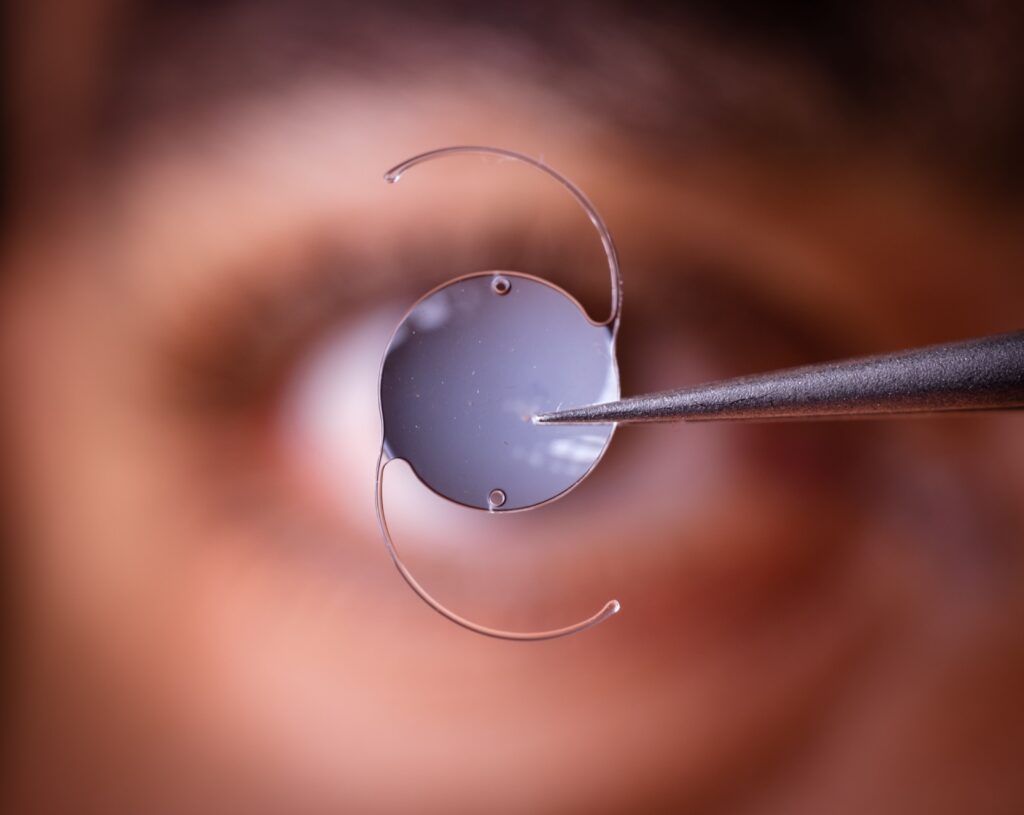
A: The artificial lens implant is permanent and designed to last your lifetime. The vast majority of patients do not experience any complications with their lenses after cataract surgery.
Q: How is the procedure performed?
A: The surgeon will make a tiny incision, break up the clouded lens with ultrasonic technology, remove the pieces, then implant an artificial lens to correct your vision.
Q: Is the operation performed on both eyes at the same time?
A: If you need cataract surgery in both eyes, the procedures are scheduled on two separate visits. Your surgeon will recommend the appropriate timing between the two surgeries to ensure the best outcome for your vision and recovery.
Lens Implants
Q: What is a lens implant and why do I need one?
A: An artificial lens implant replaces the natural lens that is removed during cataract surgery. It is necessary because your natural lens provides about 40% of the eye’s focusing power; without a replacement, you would only be able to see light and shadows.
Q: Are there different lens implant options?
A: Yes. Your surgeon will make recommendations on the lens implant based on your eye health, daily activities, and personal goals. We offer a variety of advanced technologies to complement your visual needs, accommodate your lifestyle, and reduce your need for glasses.
Q: Will I feel the implant in my eye after surgery?
A: No. The lens implant is designed to become a natural part of your vision, and you won’t feel it in your eye.
After Surgery
Q: When will I be able to see?
A: Things may look blurry right after your surgery, which is normal. Your vision will gradually improve over the next few days and weeks.
Q: Will I be able to drive myself home?
A: No. Due to the sedation administered and blurred vision, we require that you have someone drive you home after surgery.
Q: How soon can I drive and resume normal activities?
A: For most cataract surgery patients, vision improves significantly in the first 24 hours after surgery. We recommend that you have a driver available for your post-op appointment the day after surgery. After that visit, you may drive as soon as you feel comfortable doing so.
Q: What can I expect for my follow-up care?
A: After cataract surgery, you will have multiple follow-up appointments to monitor your healing. These may include a one-day, one-week, and one-month exam. During these visits, we will check your vision and eye pressure, review post-operative instructions, and ensure you are recovering normally.
Q: Can my cataract come back?
A: No. Cataracts don’t come back, however, around 30% of patients develop a cloudy membrane behind the new lens after surgery, called posterior capsule opacification (PCO). This is easily treated with a quick, in-office laser procedure.

